
Loading...
Serving South Lake Tahoe, CA and surrounding areas. (530) 307-5151
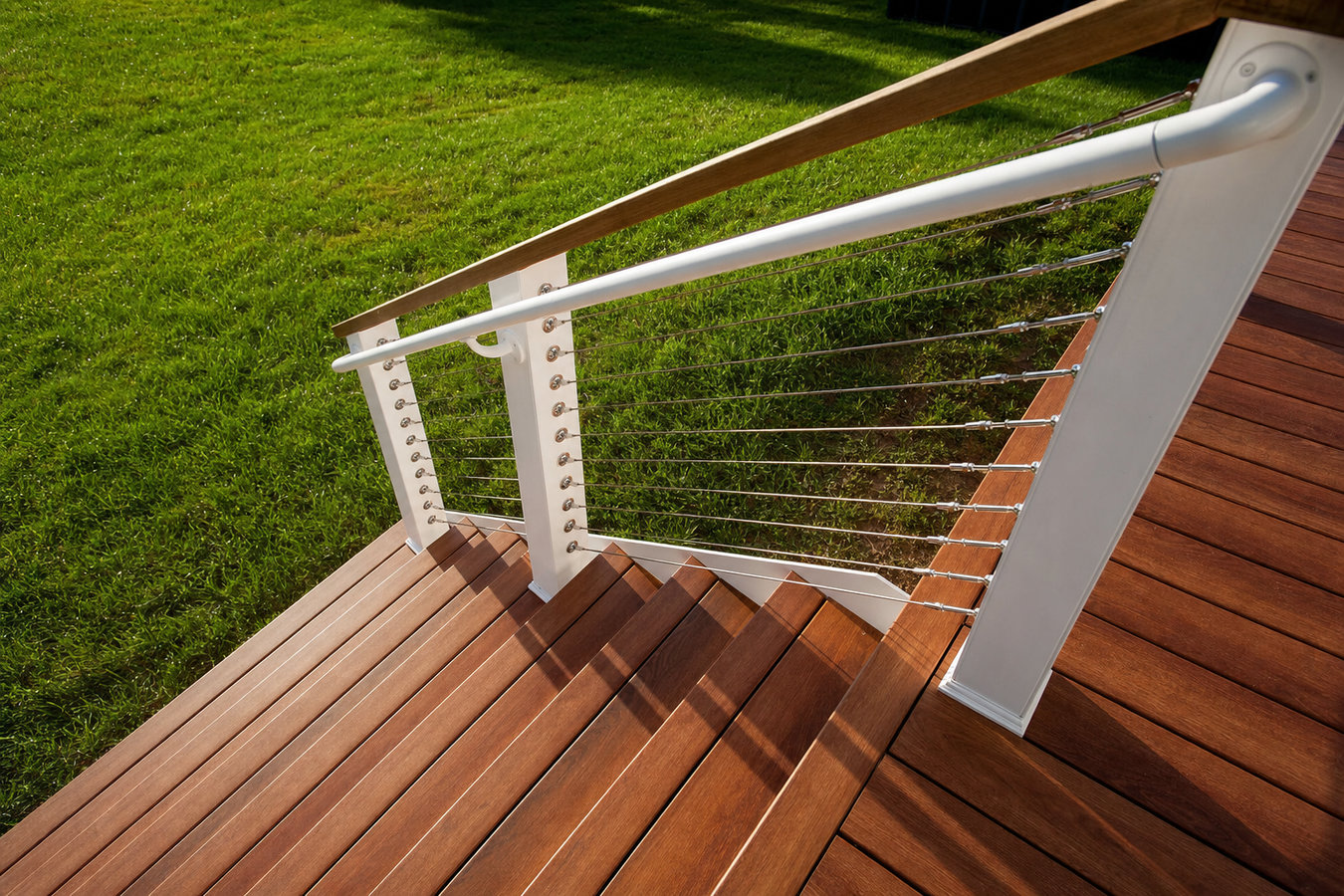
A railing that wobbles is a safety problem, not just a cosmetic one. We install and replace deck railings in South Lake Tahoe using materials and fastening methods suited to Tahoe's snow loads and freeze-thaw cycles - fully permitted and city inspected.
Deck railing installation in South Lake Tahoe means removing your old railing, setting new posts into the deck frame, and attaching rails and infill - all anchored for mountain snow loads and freeze-thaw conditions, with most standard installations completed in one to two days.
The posts are the most critical part of the job. If they are not fastened correctly to the deck frame, the railing will feel loose and can pull away from the structure after a winter or two - which is a safety issue, not just an annoyance. In South Lake Tahoe, where the snowpack is heavy and the ground freezes and thaws repeatedly through late winter and spring, post attachment has to be done right the first time. The material you choose - wood, aluminum, composite, or cable - affects maintenance requirements and appearance, but it does not matter how good the material is if the posts are not solid. Deck railing work pairs naturally with other projects. Homeowners who have noticed rot or structural damage often address it through deck repair and replacement at the same time, while those building new often plan railing as part of a complete custom deck design and build.
Stand at the railing and push outward firmly with both hands. If it shifts, flexes, or feels like it might give way, the posts are no longer anchored securely. This is the clearest sign the railing is no longer safe to lean against, and it is especially urgent if children or elderly family members use the deck regularly.
South Lake Tahoe's combination of heavy winter snowpack, spring melt, and intense summer UV is hard on wood railings. If you see gray, cracked, or soft wood - especially at the base of posts where moisture collects - the railing has likely been compromised structurally, not just cosmetically. Splinters on a handrail are a safety issue, not just an eyesore.
Look at where the posts attach to the deck - either through the surface or along the outside edge of the frame. If you can see gaps, rust stains, or the post is visibly leaning, the connection has failed. This happens frequently on older Tahoe decks after years of freeze-thaw cycles working on the fasteners.
Older decks in South Lake Tahoe were sometimes built before current safety standards were in place. If your railing comes up to your mid-thigh rather than your hip, it may not meet today's requirements. A contractor can measure it quickly and tell you whether it needs to be brought up to current standards before the next inspection or home sale.
We install new deck railings and replace existing ones throughout the South Lake Tahoe area, handling permit applications, all structural work, and the final city inspection as part of every project. The work starts with post attachment - making sure every post is fastened to the deck frame using hardware rated for outdoor use in wet, freeze-thaw conditions. A railing that looks sharp but is mounted with the wrong fasteners will loosen within a season or two in this climate. We include stair railings in every scope estimate, because stairs need a graspable handrail and missing that step is one of the most common reasons a permit fails inspection.
We also coordinate railing work with other deck projects. Homeowners addressing structural problems often combine railing with deck repair and replacement since the contractor already has access to the frame, which reduces labor compared to scheduling two separate projects. For new builds, railing is planned as part of the original custom deck design and build scope so the post placement integrates cleanly into the framing from the start.
Well-suited for homeowners who want a traditional look and are willing to seal or stain every two to three years to keep the wood in good shape through Tahoe winters.
A strong choice for low-maintenance households - these materials handle freeze-thaw cycles without cracking or absorbing moisture, and they require almost no upkeep beyond an occasional cleaning.
Popular in Tahoe because they keep mountain views open while meeting safety requirements - a good fit for decks with sightlines worth preserving and homeowners who prefer a modern, minimal look.
At roughly 6,200 feet elevation, South Lake Tahoe gets snow loads that coastal and valley California cities simply do not see. Heavy snowpack sits on deck surfaces and pushes against railings in ways that expose every weakness in how the posts were attached. Fasteners that hold fine in Sacramento loosen here. Hardware that does not rust in San Jose corrodes here because the moisture exposure is constant across a long winter. Contractors who work regularly in this basin choose their fasteners, post anchors, and rail systems with those conditions in mind - not as an afterthought. The building season is also short, running roughly from late spring to early fall, which means scheduling fills up fast once the snow melts. Homeowners in South Lake Tahoe who reach out in late winter get on the schedule before the summer rush, while those who wait until June often find themselves pushed to late summer or the following year.
The permitting process here also has an extra layer that surprises some homeowners. The City of South Lake Tahoe building division handles the standard railing permit, but properties near the lake or in environmentally sensitive zones may also need Tahoe Regional Planning Agency review before work can begin. A contractor who works regularly in the area knows which addresses trigger that extra step. Homeowners in nearby Stateline, NV and surrounding Nevada communities follow a different permitting path entirely, since those properties fall under Douglas County jurisdiction rather than the City of South Lake Tahoe.
When you reach out, we ask about the approximate length of your railing, your material preferences, and whether you have stairs. We schedule a site visit rather than quoting over the phone, because the condition of your existing deck frame affects the scope. We respond within one business day.
Once you approve the scope and price, we submit the permit application to the City of South Lake Tahoe. This step typically takes one to two weeks. We handle all the paperwork - you do not need to contact the building department yourself.
The crew removes the old railing, sets and anchors the new posts, attaches the rails, and installs the balusters or infill panels. On a standard deck this moves quickly - most of the visible work takes shape in a single day. We walk you through the finished railing before packing up.
After installation, we schedule the final inspection with the city and are on-site for it. Once it passes, we do a final cleanup, walk you through any maintenance the new railing needs, and answer any questions before we leave.
No pressure, no obligation - just a clear, written quote so you know exactly what to expect before you decide.
(530) 307-5151The post-to-frame connection is where most railing failures start. We use fasteners and hardware rated for outdoor wet conditions in freeze-thaw climates - not the same hardware you would use on a coastal California deck. That detail is what keeps the railing solid after years of heavy winters rather than loosening with each freeze cycle.
We pull the permit and we are on-site for the final inspection. That means an independent city inspector verifies the railing meets current safety requirements before the job is considered done. You get documentation that protects you if the work ever comes up in a home sale or an insurance claim. The California Department of Housing and Community Development sets the building standards that inspection is based on.
Many Tahoe homeowners choose cable railing specifically because it keeps sightlines clear. We install cable systems that meet safety requirements without blocking the view you paid for. Cable railing is one of our most requested options in this area, and we can walk you through exactly what it costs and how it compares to other materials for your specific deck.
Some South Lake Tahoe properties near the lake or in planned communities need Tahoe Regional Planning Agency review or HOA approval before railing work can begin. We know from the first site visit whether your address triggers those extra steps, so you are not surprised mid-project by a review process you did not know about. See the North American Deck and Railing Association for industry standards on railing installation.
A railing that passes inspection, holds firm after five hard winters, and looks the way you wanted when it was built - that is the standard we work toward on every project, whether it is a single railing run or a full deck with stairs and multiple sections.
Plan your entire deck from scratch - levels, materials, railing, and layout - before a single permit is submitted or a board is cut.
Learn MoreIf the deck frame underneath the railing is the real problem, addressing structural repairs and new railing in one project saves time and reduces labor cost.
Learn MoreTahoe contractors book up fast once the snow melts - reach out now to lock in your spot and have a solid, inspected railing on your deck before the season starts.